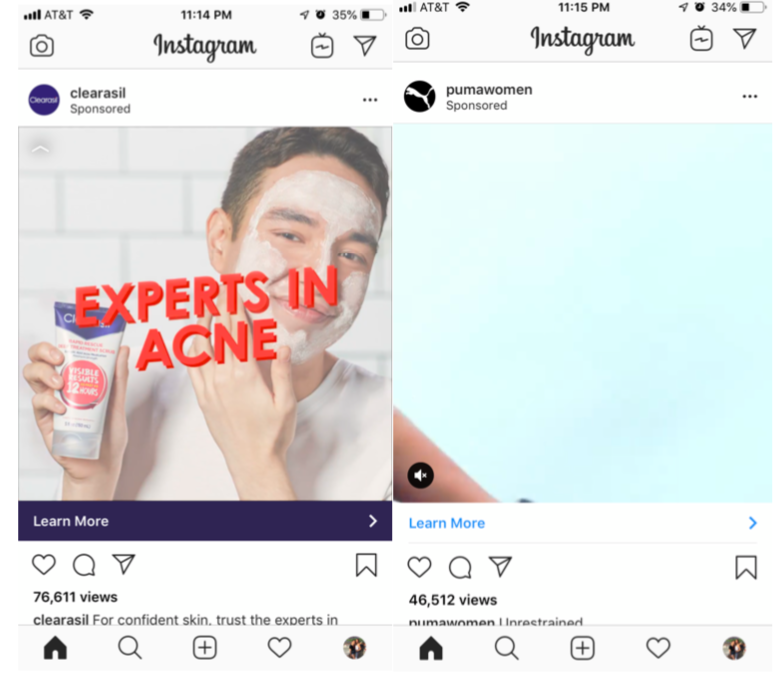
Amy Altman. My identity is not necessary for companies like Facebook or Amazon to know; however, they have access to these answers. Whether their access to these answers be through social media or my recent search history, platforms know three parts of my identity: white, college-aged, and female. For instance, on my instagram feed there are ads sponsorships from “Pumawomen,” which is based on my recent searches for athletic apparel, and “Clearasil,” which is acne prevention for women that is pertinent as my age and body, in which both continue to develop.Two facets of my identity that are not resembled in the ads on my feed or on this wheel include my personality and political affiliation. These two facets are very individualistic, but I think they act as important indicators that resemble my quirky yet authentic personality, and my political association, in which both aspects are impacted by my class, race, and other parts of my identities listed on the wheel. Now, for the purpose of this assignment, I will be examining three out of the many factors that comprise my identity: white, college-aged, female.
Talking about my identity is difficult for me. As a woman, who is white and financially able to attend college, I would categorize myself as privileged. I don’t know why I find it troublesome to talk about myself, especially my identity, but I think it’s because historically, white people, haven’t had to face the hardships and injustices like people of different races, sexes, and class backgrounds; therefore, I don’t want people to interpret my discussion about my identity as “complaining.” I am not writing for empathy or pity, but my purpose in talking about identity is to address that it is too “seen” in media; therefore, this lack of diversity is more evident than ever.
I felt the need to address my discomfort with talking about my identity that inherently garners trust and respect, because it is a completely unfair and unjust reality. This reality, my identity, and the society we live in today, associates the “dominant” group with who I am. I feel “seen” in the media; however, I think the constant portrayal of white financially stable families doesn’t accurately reflect our diverse society. This inauthentic representation of our society is based on ideology, which is a shared set of beliefs and values that is influenced by societal norms and economic infrastructures. This ideology crystallizes into normalization; therefore, creating long lasting and inaccurate portrayals. According to Greg Smith, these stereotypical representations of the “others” is a normal part of the imagery rhetoric and “it is also a fairly dependable way to make money, and that economic pressure helps explain why we continue to produce such images” (111). The economics of an industry definitely impacts the content, which is evident among the newsroom employees. Like in Jelani Cobb’s article, “When Newsrooms are Dominated by White People, they Miss Crucial Facts,” she argued the underrepresentation of minorities in print and broadcast news companies affects the portrayal, or lack thereof, of those groups. I feel like I am expected to align with today’s news media content since it’s predominantly produced and heavily directed towards white people; however, this is not our reality so the content is not as digestible. In regards to media representation, the show “Insecure,” which is written, produced, and created predominantly by blacks, portrays the lives of two black women living and working in a white, hyper-masculine environment. This improvement of changing the racial and ethnic makeup of the writer’s room and newsroom to better reflect the world is a step towards more accurate portrayal of the “others,” while diminishing this exclusive and derogatory labeling to be more inclusive and reform.
 Chowing Down on Culture
